Joint Pain Solutions Without Surgery Options
For adults managing persistent knee aches, hip stiffness, or shoulder discomfort, the instinct is often to assume that major surgery is an inevitable endpoint. Research and clinical practice consistently challenge that assumption. Nearly 60 million Americans live with arthritis alone, and that figure excludes the millions more managing pain from injuries, overuse, or age-related wear.1 Orthopedic medicine has advanced significantly over the past two decades, and major surgical interventions are no longer the automatic next step for chronic joint issues.2 The sections below outline what the current evidence actually supports.
The Scale of the Problem and Why Non-Surgical Pathways Matter
Approximately 25 percent of adults over the age of 45 in the United States face frequent joint pain that limits daily activities, according to clinical data.3 A board-certified orthopedic surgeon with more than 20 years performing hip and knee replacements has publicly noted that as many as 7 in 10 older adults live with joint pain, and more than half rate their symptoms moderate to severe.4 Critically, that same clinician teaches that pain and joint damage are not the same thing: some patients with bone-on-bone arthritis feel very little, while others with mild X-ray changes hurt every single day. This distinction matters because it opens the door to non-surgical management strategies that address the pain experience rather than simply the structural findings.
The financial and physical burden of total joint arthroplasty is also significant. A typical knee or hip replacement involves months of rehabilitation, carries risks including general anesthesia complications and hospital-acquired infections, and artificial implants last approximately 15 to 20 years, meaning younger patients who undergo replacement are likely to require revision surgery later in life.5 These realities explain why both patients and clinicians increasingly prioritize exploring non-surgical joint pain solutions first.
Physical Therapy and Targeted Exercise: The Foundational Treatment
Physiotherapy specialist Clodagh Toomey from the University of Limerick wrote in a 2025 commentary that the best medicine for joint pain is not found in a pill bottle or an operating theater, arguing that too few patients are being guided toward the one therapy proven to protect joints and ease pain: exercise.6 Current guidelines from major health bodies, including the NHS and the American College of Rheumatology, recommend physical activity and physiotherapy as the primary first-line treatment for osteoarthritis and chronic joint conditions.7 Structured physical therapy strengthens the muscles surrounding affected joints, enhances flexibility, reduces strain, and improves posture.
Low-impact aerobic activities are particularly well supported. Swimming, cycling, walking, water aerobics, yoga, and tai chi all maintain joint mobility without the high impact associated with running or jumping.8 Emerging evidence across the United States, Europe, and the United Kingdom consistently finds that most patients with osteoarthritis are not being referred to a physical therapist, with some receiving surgical referrals first, a pattern researchers describe as clinically problematic.6 Physical therapy does not regrow cartilage, but it measurably eases pressure on the joint by improving muscular support, which can reduce pain and enhance stability.
Medications, Topical Agents, and Supportive Devices
Non-steroidal anti-inflammatory drugs (NSAIDs) such as ibuprofen and naproxen are frequently used to reduce joint pain and localized inflammation when taken under appropriate medical guidance.9 However, long-term regular ibuprofen use carries documented risks including stomach ulcers and cardiovascular events, while long-term paracetamol use is now recognized as less effective for chronic joint pain than previously thought.10 NICE guidelines cover conservative pharmacological management, including NSAIDs and corticosteroid injections, as evidence-based options within a broader plan.
Topical analgesics, including capsaicin cream and diclofenac gel, offer a localized alternative to systemic oral medications, reducing the systemic side-effect burden.9 Orthopedic braces and offloading devices represent another supportive tier, particularly for knee conditions, by redistributing mechanical load away from the most damaged joint compartment. Dietary supplementation with glucosamine, chondroitin, Devil's Claw, cod liver oil, and vitamin D3 plus K2 has clinical trial evidence behind it, though evidence quality varies by compound, and expectations should be calibrated accordingly.10
Injection Therapies: From Corticosteroids to Viscosupplementation
Injection-based treatments occupy a middle tier between home management and regenerative medicine. Corticosteroid injections, commonly called cortisone shots, mimic cortisol to reduce swelling and discomfort, and can be administered into large joints such as the knee and shoulder or into smaller areas like the hand and ankle.11 Patients often report relief within days, with results lasting from several weeks to months depending on the underlying condition. These injections are generally limited to a few administrations per year to avoid potential cartilage damage with repeated use.9
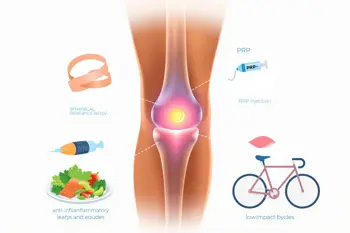
Hyaluronic acid injections, also known as viscosupplementation, improve joint lubrication and reduce stiffness, particularly in knee osteoarthritis.12 This gel-like substance mimics the joint's natural lubricating fluid. Ultrasound-guided injection techniques have improved precision considerably: unlike X-rays or MRIs, ultrasound provides real-time imaging without radiation, ensuring medication is delivered accurately to the affected area and minimizing misplacement risk.11 Nerve blocks and radiofrequency ablation, which uses heat generated by radio waves to disrupt pain signals from specific nerves, represent additional interventional options that do not involve open surgery.
Regenerative Medicine: PRP, Stem Cell Therapy, and Emerging Procedures
Platelet-rich plasma (PRP) therapy has become one of the most discussed non-surgical joint pain solutions in contemporary orthopedic practice. The procedure involves drawing a small blood sample, spinning it in a centrifuge to concentrate healing platelets, and injecting the resulting plasma into the affected joint. Platelets contain growth factors that stimulate tissue repair, reduce inflammation, improve blood flow, and may offer longer-lasting improvement than corticosteroid injections, which primarily suppress inflammation rather than stimulate healing.13 PRP is applied to osteoarthritis, tendon injuries including tennis elbow and Achilles tendinopathy, ligament sprains, rotator cuff injuries, and chronic joint pain across multiple joint sites.14
Stem cell therapy, part of a broader category called regenerative or bio-cellular therapy, focuses on supporting the body's natural healing environment rather than masking symptoms. It may help reduce joint inflammation, support cartilage and tissue function, improve mobility, and potentially slow the progression of joint degeneration, though clinical evidence is still maturing.15 A newer minimally invasive outpatient procedure called genicular artery embolization (GAE) targets inflamed blood vessels around the knee, reducing circulation to abnormal vessels linked to inflammation. A vascular interventional radiologist at the University of Colorado Anschutz School of Medicine has described GAE as filling the gap for patients who have failed conservative treatments but are not ready for major surgery.16 Research published in Discover Magazine in 2026 also points toward future single-injection regenerative treatments for osteoarthritis, indicating that the frontier of non-surgical options continues to expand.17
Lifestyle Modifications, Dietary Factors, and Realistic Expectations
Weight management is consistently identified as one of the most impactful non-surgical joint pain solutions for load-bearing joints. Even modest reductions in body mass significantly decrease the mechanical stress placed on the knees and hips, where osteoarthritis is most prevalent.8 Anti-inflammatory dietary patterns, including regular consumption of fatty fish rich in omega-3 fatty acids, leafy greens, and berries, can meaningfully reduce systemic inflammation and support joint health.18 Heat and cold therapy, applied appropriately for the type and phase of pain, offer accessible self-management tools. Cold reduces acute inflammation; heat improves blood flow and eases muscular tension around stiff joints.
Combining multiple approaches consistently yields better outcomes than any single intervention in isolation. Structured physical activity, anti-inflammatory nutrition, better sleep, and targeted mind-body practices collectively address different aspects of why joints hurt.4 Clinical evaluation remains essential before selecting any treatment pathway. The type and severity of joint damage, patient age, overall health status, activity goals, and prior treatment history all determine which combination of non-surgical options offers the best risk-to-benefit ratio for an individual. Surgery remains an appropriate option when quality of life does not improve despite a comprehensive non-surgical effort, but it is best understood as a last step rather than a default progression.4
| Treatment Category | Primary Examples | Best Suited For | Key Consideration |
|---|---|---|---|
| Physical Therapy | Strengthening, stretching, hydrotherapy | Most joint conditions, first-line use | Requires consistent participation; does not regrow cartilage |
| Medications | NSAIDs, topical diclofenac, capsaicin | Mild to moderate pain management | Long-term oral NSAID use carries GI and cardiovascular risks |
| Injection Therapies | Corticosteroids, hyaluronic acid, nerve blocks | Moderate to severe pain, limited frequency | Corticosteroids limited to a few times yearly to protect cartilage |
| Regenerative Medicine | PRP, stem cell therapy, GAE | Active adults delaying or avoiding surgery | Evidence still maturing; not universally covered by insurance |
| Lifestyle Modification | Weight loss, anti-inflammatory diet, low-impact exercise | Long-term management of all joint conditions | Foundational; amplifies benefits of all other interventions |
Sources
- cnsorthopedics.com - An Essential Guide to Joint Pain Treatment
- jointhealthsolutions.com - Non-Surgical Treatment Options for Chronic Joint Pain
- livhospital.com - Treatment for Pain in Knee Joint Without Surgery
- corycalendinemd.com - Joint Pain Relief That Really Works: Proven Approach
- healthcheckbox.com - Alternatives to Knee Replacement Surgery: Non-Surgical Solutions
- sciencealert.com - The Best Medicine For Joint Pain Isn't What You Think, Experts Say
- NHS - Osteoarthritis Treatment Guidance (nhs.uk)
- nortexspineandjoint.com - Alternative Treatments for Joint Pain to Improve Mobility
- Mayo Clinic - Arthritis Diagnosis and Treatment (mayoclinic.org)
- nutrivity.co.uk - What Helps Joint Pain Naturally? 7 Evidence-Based Approaches
- sayeehospitals.in - Non-Surgical Solutions For Joint Pain And Mobility
- londoncartilage.com - Non-Surgical Solutions for Knee Cartilage Repair and Recovery
- jointhealthsolutions.com - PRP Therapy for Joint Pain and Tendon Injuries
- arthritisandsports.com - Platelet-Rich Plasma (PRP) Therapy: Non-Surgical Joint Pain Relief
- drstemcell.com - Stem Cell Therapy for Knee, Hip, and Joint Pain
- scitechdaily.com - This Tiny-Bead Procedure Is Helping Patients Avoid Knee Replacement
- discovermagazine.com - Osteoarthritis Could One Day Be Treated With a Single Regenerative Shot
- smjrscorp.com - 5 Natural Remedies to Ease Knee Pain Without Surgery
Authored by ZenSpotter team