Light commercial vehicles from government: current auction list: An Analytical Review of Public Fleet Sales
Searching for light commercial vehicles from government to secure high-utility fleet assets typically involves monitoring a current auction list compiled from municipal, state, and international disposal portals. These structured asset sales allow organizations to transition surplus trucks and transport vans to private buyers under strictly regulated conditions.
Global Framework for Government Fleet Disposals
Individuals and logistics coordinators looking for light commercial vehicles from government to acquire high-utility machinery rely on centralized public networks to locate a current auction list. Public institutions regularly decommission utility trucks, passenger transport vans, and cargo assets once they reach predetermined service milestones or when fiscal fleet refreshes occur. These public asset disposals are traditionally outsourced to licensed clearing houses or official online procurement networks to guarantee transparent, market-driven bid processes 1.
The structured nature of public sector vehicle turn-ins means that retired inventory can range from exceptionally maintained highway cruisers to non-running utility assets designated for salvage 2. Tracking these offloaded assets requires monitoring regional digital portals that host either timed online bidding setups or traditional, on-site oral bidding events 3. This ensures public transparency and allows institutional buyers to acquire surplus machinery under direct state oversight.
North American Municipal and State Fleet Offload Listings
In North America, local municipalities and state-level departments of transportation organize structured auctions to cycle out transport and light commercial vehicles. For example, the North Carolina Department of Transportation regularly conducts procurements and subsequent disposal of new and used Light Transit Vehicles (LTVs) and Raised Roof Vans to support regional mobility and transit systems 4. On a county level, regional organizations like Floyd County, Georgia, utilize private liquidators to host structured fleet reductions, offering specialized cargo units like 2014 Freightliner M2 and 2009 International 4300 diesel box trucks 5.
| Asset | Agency | Specifications | Ref |
|---|---|---|---|
| Silverado 3500HD | Ste. Genevieve, MO | 91,736 miles, V8 gas, snow plow mount | 6 |
| Ford F-150 | Regional Surplus | Reserve of $1,500.00, sold as-is | 7 |
| Freightliner M2 | Floyd County, GA | 236,639 miles, automatic, diesel | 5 |
| Crown Victoria | State/Local Surplus | Running vehicle, sold in as-is condition | 2 |
International Public Sector and Humanitarian Fleet Liquidations
Beyond North American municipal sales, global humanitarian and diplomatic organizations systematically rotate their light commercial inventory. For example, the United Nations World Food Programme (WFP) in Tajikistan structures digital disposal processes, using specialized mobile applications to allow verified participants to bid on four-wheel-drive light vehicles, including Toyota Land Cruiser Prados 8. Similarly, the US Department of State's international offices, such as the US Embassy in Praia, Cabo Verde, manage diplomatic fleet refreshes by listing specific high-roof commercial vans like the 2026 Toyota HiAce through competitive quotation requests 9.
National administrative departments in South America and South Asia also rely on competitive bidding models to liquidate service vehicles. The Ministry of Finance in Guyana regularly processes fleet disposal bids, listing specific light utility models such as the Toyota Fortuner and Nissan Navara pickups on a strict "as-is, where-is" basis 10. Furthermore, maritime and coastal security agencies, such as the Pakistan Maritime Security Agency in Karachi, hold publicized physical auctions to offload off-road trucks and utility vehicles directly to registered local commercial operators 11.
Typical Commercial Models and Mechanical Configurations
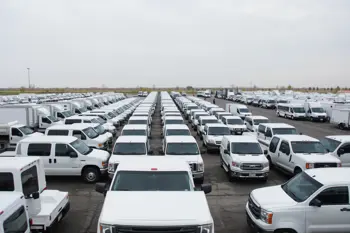
The variety of light commercial vehicles from government on a current auction list remains highly consistent, focusing on models built for industrial utility. Heavy duty pickup trucks with extended utility beds, four-wheel-drive systems, and large displacement engines represent the bulk of domestic offerings, led by the Ford F-Series and Chevrolet Silverado lines 7 12. These vehicles frequently feature municipal upgrades such as integrated exterior toolboxes, heavy duty snow plow mounts, and integrated brake controllers required for public works 6 12.
Passenger transit and cargo logistics units are also represented in public disposals. High-roof cargo vans, including the Toyota HiAce or equivalent models, are commonly utilized for personnel transport and specialized delivery tasks in urban and diplomatic environments 9. For larger cargo logistics, fleet liquidations frequently present medium-duty box trucks with diesel powertrains and automatic transmissions, configured with cargo rails, ramp access, and multi-passenger seating arrangements to accommodate municipal work crews 5.
Bidding Mechanisms and Registration Protocols
To participate in public vehicle auctions, prospective buyers must navigate structured multi-step registration and vetting protocols. Programs like Peru’s National Program of Seized Assets (PRONABI) require interested buyers to download official administrative bases, register as validated bidders during designated registration windows, and submit credential envelopes under seal 3. Many global disposal programs now rely on electronic platforms, requiring users to install proprietary mobile apps to browse vehicle specifications, review maintenance logs, and submit digital bids 8.
Financial security is a core element of the bidding process. Most government agencies and third-party auction houses mandate a refundable bid deposit prior to allowing live participation 13. Additionally, winning bids are typically subject to a buyer’s premium, often around ten percent of the final bid price, which is added to the total transaction cost 6. Buyers must also account for rigid payment windows, with full cleared funds required before any logistics or transport arrangements can be finalized.
Risks, Inspections, and Administrative Realities
Acquiring surplus public assets involves distinct operational risks and administrative friction points. Because government vehicles are sold strictly on an "as-is, where-is" basis, buyers assume full responsibility for any latent mechanical defects or structural degradation 12. For instance, some fleet listings explicitly note mechanical issues, such as a box truck requiring constant plug-in charging in cold weather 5, or a check engine warning light remaining active on a high-mileage utility truck 12.
Furthermore, administrative and title transfers can present substantial delays. Title distribution from municipal or federal agencies may take up to fourteen business days following the verification of cleared funds 6. Additionally, certain vehicles may carry salvage titles or be designated as non-running, restricting their immediate road readiness 2 5. Some federal tenders, such as the Defense Logistics Agency's disposition of Maxus crew cab trucks, even prohibit physical on-site pre-inspection, forcing bidders to rely entirely on static photographs and remote reports 14.
Sources
- GovDeals Transportation
- America Bid Network
- Ministerio de Justicia y Derechos Humanos - PRONABI
- CLEATUS - North Carolina DOT
- Dempsey Auction Company
- Starbridge - City of Ste. Genevieve
- America Bid Network
- BidsFactory - WFP Tajikistan
- CLEATUS - Praia Cabo Verde
- BidsFactory - Ministry of Finance Guyana
- Daily Tender Alert
- RTI Auctions
- Tuko - Kenya ODPP
- Sweetspotgov
Authored by ZenSpotter team